Manhattan
Ranked 39th best city in New York
- Follow
- Write a review
- Ask a question




















Great for
- Safe & Sound
- Parks & Recreation
- Public Transport
- Schools
- Internet Access
Not great for
- Parking
- Nightlife
- Cost of Living
Who lives here?
- Professionals
- Singles
- Families with kids
- Retirees
- Tourists
Got a burning question? Why not ask the locals! Simply ask your question below

Reviews
Manhattan

rating details
2yrs+
- Neighborly Spirit
- Safe & Sound
- Clean & Green
- Peace & Quiet
- Eating Out
- Nightlife
- Shopping Options
- Internet Access
- Lack of Traffic
- Parking
- Cost of Living
- Resale or Rental Value
- Public Transport
"The City that Never Sleeps"
The desire for the twenty-something crowd (aka young professional) to move to New York City is not unheard of — not even close. I have several friends who made the jump to the Big Apple — three from Seattle, one San Diego brokers’ daughter, & Sloane. Multiple others I’ve spoken to have expressed a desire to pack their bags for the big apple.
The first time I went to New York City was the 2007 Inman Connect real estate conference. While working for Zillow and Virtual Results, I attended the next 4 Connect Conferences in NYC up until 2011 (I missed 2012 since I left for SE asia right after Christmas). From the moment I first set foot in the Big Apple in 2007, I was hooked. The dirty & packed subway during rush hour, Central Park, Brooklyn, the quaint bars in the West Village…the general “vibe” of the bustling city that never stops moving. The list goes on and on. Between 2007 and 2011, I looked forward to my time in NYC every January. I met some amazing New Yorkers who are now close friends. I ate AMAZING Korean BBQ.
Watch this: https://vimeo.com/31159101
There’s just something about New York that draws the young professional in. I can’t quite put my finger on what exactly “IT” is, but it’s certainly alive and burning for me.
The first time I went to New York City was the 2007 Inman Connect real estate conference. While working for Zillow and Virtual Results, I attended the next 4 Connect Conferences in NYC up until 2011 (I missed 2012 since I left for SE asia right after Christmas). From the moment I first set foot in the Big Apple in 2007, I was hooked. The dirty & packed subway during rush hour, Central Park, Brooklyn, the quaint bars in the West Village…the general “vibe” of the bustling city that never stops moving. The list goes on and on. Between 2007 and 2011, I looked forward to my time in NYC every January. I met some amazing New Yorkers who are now close friends. I ate AMAZING Korean BBQ.
Watch this: https://vimeo.com/31159101
There’s just something about New York that draws the young professional in. I can’t quite put my finger on what exactly “IT” is, but it’s certainly alive and burning for me.
Pros
- Always something to do
- Can get anywhere on public transit
- Energy, and Diversity
Cons
- Expensive...everything
Recommended for
- Professionals
- Singles
- Tourists
Manhattan
rating details
2yrs+
- Neighborly Spirit
- Safe & Sound
- Clean & Green
- Pest Free
- Peace & Quiet
- Eating Out
- Nightlife
- Parks & Recreation
- Shopping Options
- Gym & Fitness
- Internet Access
- Lack of Traffic
- Parking
- Cost of Living
- Resale or Rental Value
- Public Transport
- Medical Facilities
- Schools
- Childcare
"A place all humans must visit"
Manhattan is the commercial capital of the world. It is "THE CITY" of the world. Most of it is too expensive and parking is a headache but for the young and single, this is as good as it gets on earth.
Pros
- Lots to do
- where dreams happen
- Many people of all types
Cons
- Too crowded
- No parking
Recommended for
- Professionals
- Singles
- Tourists
- LGBT+
- Hipsters
- Students
- Trendy & Stylish
Manhattan

rating details
2yrs+
- Neighborly Spirit
- Safe & Sound
- Clean & Green
- Pest Free
- Peace & Quiet
- Eating Out
- Nightlife
- Parks & Recreation
- Shopping Options
- Gym & Fitness
- Internet Access
- Lack of Traffic
- Parking
- Cost of Living
- Public Transport
- Medical Facilities
- Schools
"The Reason New York is Allowed to be Stuck Up"
While tourists feel compelled to flock to Times Square the second they step foot in New York, the center of New York culture really lies just a bit north, and just a bit east. A walk up Fifth Avenue would reveal sprawling rows of the world’s most prestigious stores, all perfectly pristine and packed with designers’ beautiful new wares. Choose between designer boutiques or revered department stores like Saks Fifth Avenue and Bergdorf Goodman. For even more exclusive fashion meccas, head one avenue east to Madison for the likes of Gucci and Chloé. If it’s a better mix of affordable and luxurious you’re looking for, it’s over to Lexington for you to pop into Bloomingdale’s.
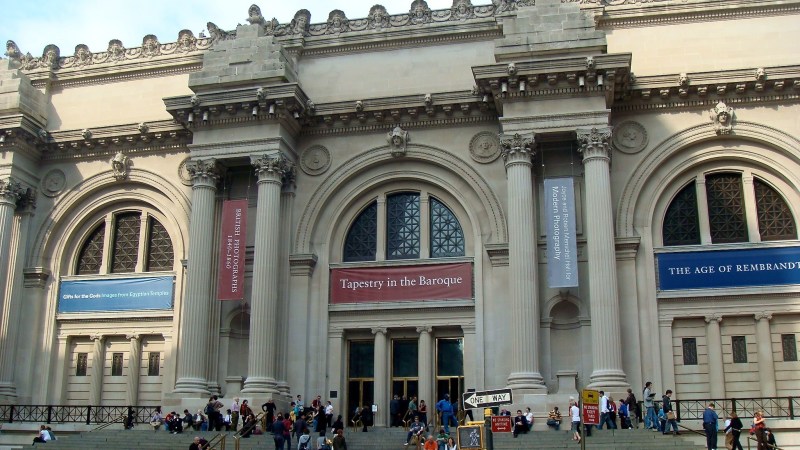
The Upper East Side boasts the beautiful sights of old-world money – the grandiose architecture of the Plaza and the Dakota, world consulates, libraries and architecture built with nineteenth century European architecture in mind, marble structures and statues galore. You can get lost in Central Park and all of its diverse views, or take in art collections at the Guggenheim, the Metropolitan Museum of Art, the Frick Collection or the Whitney Museum of Art. There are plenty of both seasonal and year-round flea markets to check out, offering better items than most fleas thanks to the higher quality of cast-offs from the UES’ wealthy inhabitants. The UES seems to be too busy being the capital of culture and shopping to handle being the culinary capital, too – but gems like Café Boulud, The Mark and Il Vagabondo do their part to keep the neighborhood’s restaurant reputation strong enough. Plus, being home to one of New York’s most beloved – and most expensive – restaurants, Le Cirque, helps. You might not be able to afford to live on the Upper East Side, but if you do some saving, you could have a really wonderful, really prestigious day there.
The Upper East Side boasts the beautiful sights of old-world money – the grandiose architecture of the Plaza and the Dakota, world consulates, libraries and architecture built with nineteenth century European architecture in mind, marble structures and statues galore. You can get lost in Central Park and all of its diverse views, or take in art collections at the Guggenheim, the Metropolitan Museum of Art, the Frick Collection or the Whitney Museum of Art. There are plenty of both seasonal and year-round flea markets to check out, offering better items than most fleas thanks to the higher quality of cast-offs from the UES’ wealthy inhabitants. The UES seems to be too busy being the capital of culture and shopping to handle being the culinary capital, too – but gems like Café Boulud, The Mark and Il Vagabondo do their part to keep the neighborhood’s restaurant reputation strong enough. Plus, being home to one of New York’s most beloved – and most expensive – restaurants, Le Cirque, helps. You might not be able to afford to live on the Upper East Side, but if you do some saving, you could have a really wonderful, really prestigious day there.
Recommended for
- Professionals
- Singles
- Families with kids
- Retirees
- Tourists
- LGBT+
- Hipsters
- Students
- Trendy & Stylish


Manhattan

rating details
2yrs+
- Neighborly Spirit
- Safe & Sound
- Clean & Green
- Pest Free
- Peace & Quiet
- Eating Out
- Nightlife
- Parks & Recreation
- Shopping Options
- Gym & Fitness
- Internet Access
- Lack of Traffic
- Parking
- Cost of Living
- Resale or Rental Value
- Public Transport
- Medical Facilities
- Schools
- Childcare
"What is it about this place?"
Manhattan Island and a scattering of smaller islands such as Liberty Island and Governor's Island make up the county of New York, the single most densely populated county in the United States. It is also one of the wealthiest counties in the country, with average personal income above $100,000 per year. The original city of New York was at the southern tip of Manhattan, and expanded first upward on the island, and then outward to surrounding boroughs. The original Lenape natives told a visiting missionary that the name Manhattan translates to “the island where we all become intoxicated,” but in fact they were pulling the old missionary's leg and the name means “island of many hills” in the Lenape language. It was the center of commercial activity since the very first settlers set foot here, and also of greed and shenanigans, if you go by the stories that Europeans “bought” Manhattan from the native people in exchange for a handful of beads. Manhattan strongly re-established itself as an economic center in the 1980's, and it has been the site of several important American cultural movements. It is an epicenter in so many ways, both nationally and internationally. Many people remark that it is its own country, and by its very density and intensity bears little resemblance to the rest of the United States.
Fact: Manhattan was originally hilly swampland. Its distinctive skyscrapers are clustered where they are downtown because the ground underneath was determined to be capable of withstanding the weight of such enormous structures. The reason you don't see many very tall buildings uptown is because the ground is soft sand that wouldn't support the load. Fact: during the summertime epidemics of typhoid that swept through the city during the 1700's and 1800's, wealthy city residents would retreat to their country estates to wait out the disease, and then return in the fall when it had run its course through the poor populations in the city. Those “country estates” were located in what is now Greenwich Village, which might give a sense of how tiny a fraction of Manhattan's southern tip was actually populated at the time.
Fact: Manhattan was originally hilly swampland. Its distinctive skyscrapers are clustered where they are downtown because the ground underneath was determined to be capable of withstanding the weight of such enormous structures. The reason you don't see many very tall buildings uptown is because the ground is soft sand that wouldn't support the load. Fact: during the summertime epidemics of typhoid that swept through the city during the 1700's and 1800's, wealthy city residents would retreat to their country estates to wait out the disease, and then return in the fall when it had run its course through the poor populations in the city. Those “country estates” were located in what is now Greenwich Village, which might give a sense of how tiny a fraction of Manhattan's southern tip was actually populated at the time.
Pros
- everyone dressed so well
- everyone is here
- a place you make your career
Cons
- expensive
- shenanigans
Recommended for
- Professionals
- Singles
- Tourists
- Hipsters
- Students
- Trendy & Stylish


